Doomscrolling is Wrecking Your Sleep
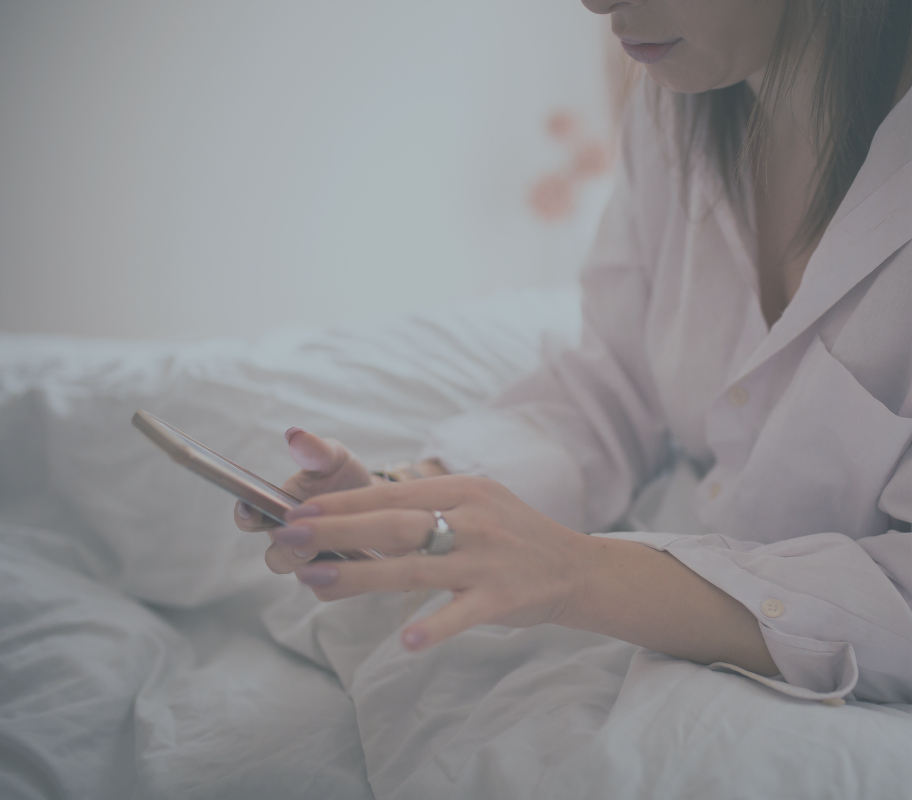
Be honest. How many nights have you told yourself you’d just check your phone for a minute before bed and then looked up 45-minutes later having absorbed seventeen pieces of terrible news about the world?
Same!
It turns out we are very much not alone. A recent survey from the American Academy of Sleep Medicine (which surveyed over 2,000 US adults) found that more than a third of Americans say scrolling through news and current events before bed is making their sleep worse. And only 14% of people said they never do it at all. Which means the other 86% of us are lying in bed absorbing bad news and wondering why we can’t relax.
If you’re between 18 and 24, it’s even more pronounced. Nearly half of young adults in that age range reported sleep getting worse form the habit. But honestly? No generation is immune.
So, What Is Doomscrolling, Really?
Doomscrolling is the habit of compulsively consuming negative news and content online. This happens usually at night, well past the point where it’s making you feel better and you telling yourself you’re about to stop.
The term blew up during the pandemic for obvious reasons, but it hasn’t gone anywhere since. Between political instability, climate news, economic anxiety, and the general state of the world, there’s not shortage of headlines to spiral into at 11pm.
And here’s the thing that makes it hard to just “put down the phone”: your brain is doing this because it’s wired to. The same threat-detection system that kept your ancestors alive by scanning for danger is now scanning your news feed and it really can’t tell the different between a predator in the bushes and a breaking news alert.
What It’s Actually Doing to Your Brain and Body at Night
There are two things happening when you doomscroll before bed, and both of them are bad news for your sleep.
The blue light problem
Your phone screen emits blue light, and blue light tells your brain its daytime. Specifically, it suppresses melatonin (the hormones your body uses to signal that it’s time to sleep). So even if you feel tired, your brain is getting a very clear message to stay alert. The AASM recommends cutting off blue light from devices 30-60 minutes before bed exactly for this reason.
The stress response problem
Blue light is a part of it. The content itself is the other part. When you read stressful upsetting news, your body activates a stress response. Cortisol and adrenaline flood your system, your heart rate picks up and your nervous system shifts into a state of alertness.
Research published by Computers in Human Behavior Reports found that doomscrolling triggers existential anxiety. And psychologists note the more we scroll to ease the anxious feeling, the worse it actually gets. Because, we’re training our brains to stay in the loop looking for threats.
Put these two things together (the brain thinking it’s daytime and a nervous system that thinks there’s a threat) and you’ve got a recipe for lying wide awake at midnight starting at the ceiling.
Harvard doctors have even coined the term for that chronic phone overstimulation does to us: “popcorn brain”; where your brain gets to used to rapid-fire stimulation that the real word, that moves slower, starts to feel boring and hard to engage with. Including, you know, the part where you’re support to just lie quietly and fall asleep.
Why You Keep Doing It Anyway
Here’s something worth sitting with: most people who doomscroll know it’s not helping them. A 2024 Morning Consult survey found that about 71% of Americans believe doomscrolling comes down to a lack of self-control. But that framing lets the platforms off the hook because infinite scroll, auto play, and algorithmically curated content that keeps serving you the most emotionally charged stuff are not accidents. They are features.
Your phone is designed by people whose entire job is to keep you on it as long as possible. You are not weak for finding it hard to put it down. You are fighting against a machine that has been specifically built to win that fight.
There's also a psychological piece: doomscrolling feeds what researchers call intolerance of uncertainty. when things feel out of control in the world, our brains reach for information as a way to feel like we’re doing something. Even when that information is making us feel worse, we keep scrolling because stopping feels like giving up control. It’s a loop and recognizing it is the first step to interrupting it.
What Actually Helps (That Isn’t Just ‘Put the Phone Down’)
Telling someone who doomscrolls to just stop is like telling someone with insomnia to just sleep. Helpful in theory, but useless in practice. Here are things that actually work:
Give yourself a hard stop time and make it physical
Set a phone curfew at least 30 minutes before you want to be asleep but 60 is better. Then put it somewhere that requires actual effort to get to. Not face down on your nightstand. In another room if you can swing it. Use a real alarm clock so you don’t have the exuse of needing it nearby.
Replace the scroll with something your hands can do
The urge to scroll is partly habitual and partly sensory. Your hands are used to having something to do. Replace it with something tactile, like journaling, a book, a hot shower, a skincare routine, light stretching. Something that gives your hands and eyes something to do that isn’t a screen. Check out my post on building a sleep routine suing your 5-senses for a practical place to start.
Set a news boundary (not a news blackout)
You don’t have to stop watching the news. You just can’t do it in bed at 11pm. Designate a specific time earlier in the day to catch up like 15-20 minutes before 7pm and then let yourself be done with it. You will not miss anything critical. The news will still be there in the morning.
Work on the anxiety underneath it
For a lot of people, doomscrolling isn’t just a bad habit but a symptom of an anxious nervous system looking for something to do with all that worry. If you notice you can’t stop even when you want to, or that the anxiety is spilling into other areas of your life, that’s worth paying attention to. The scroll is a coping strategy. Addressing what it’s coping for is where the relief lives.
You’re Allowed to Log Off
Staying informed matters. But not at the expense of your sleep, your nervous system, and your mental health. The world’s problems will still be there after you’ve had eight hours of sleep and you’ll be better equipped to deal with them rested.
You are allowed to close the app. You’re allowed to rest. Nothing breaking tonight requires your attention at midnight.
Still Can’t Sleep Even When You Put the Phone Down?
If you’ve already cut back on screens and you’re still laying awake, doomscrolling might not the be whole story. Chronic insomnia often has deeper roots that take more than a phone curfew to address. I offer CBT-I therapy for individuals ready to get to the bottom of what’s keep them up. Contact today and lets figure it out.